Learn the wildlife of any country
Learn the wildlife of the Marshall Islands
Oceania
2,611 species have research-grade observations in the Marshall Islands on iNaturalist. KnowKi turns the most recorded into short lessons with real photos, so you can learn a country's wildlife from home.
Meet the birds of the Marshall Islands →Your first lesson starts right away, with real photos. Free, no sign-up.
What animals live in the Marshall Islands?
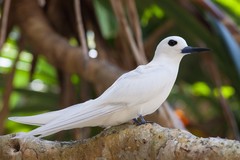
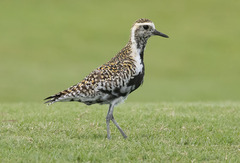
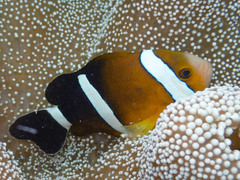
The animals people record most often in the Marshall Islands include the Pacific Reef Heron, the Blue-billed White-Tern, the Pacific Golden-Plover, the Three-band Anemonefish and the Pink Skunk Anemonefish. The most recorded plant is beach naupaka.
Most recorded here
The species with the most research-grade observations on iNaturalist, and how many each has. Most recorded doesn't mean native.
Birds
- Pacific Reef Heron Egretta sacra47
 Blue-billed White-Tern Gygis candida35
 Pacific Golden-Plover Pluvialis fulva26
 Black Noddy Anous minutus19
- Black-naped Tern Sterna sumatrana16
 Ruddy Turnstone Arenaria interpres13
 Great Frigatebird Fregata minor10
 Greater Crested Tern Thalasseus bergii10
Plants
 Beach naupaka Scaevola taccada30
- Coconut palm Cocos nucifera29
 Tree heliotrope Heliotropium arboreum29
 Beach Morning Glory Ipomoea pes-caprae14
- Thatch screwpine Pandanus tectorius14
 Noni Morinda citrifolia13
 Laurel dodder Cassytha filiformis12
 Beach Gardenia Guettarda speciosa12
 Grand devil's-claws Pisonia grandis11
- Polynesian Arrowroot Tacca leontopetaloides10
Reptiles
 Emerald Tree Skink Lamprolepis smaragdina43
 Green Sea Turtle Chelonia mydas32
 Mourning Gecko Lepidodactylus lugubris25
 Hawksbill Sea Turtle Eretmochelys imbricata23
 Green Anole Anolis carolinensis15
 Common House Gecko Hemidactylus frenatus12
Fish
 Three-band Anemonefish Amphiprion tricinctus221
- Pink Skunk Anemonefish Amphiprion perideraion144
 Orangefin Anemonefish Amphiprion chrysopterus124
 Blackback Anemonefish Amphiprion melanopus52
 Blackeye Thicklip Hemigymnus melapterus37
 Honeycomb Grouper Epinephelus merra32
 Redfin Bream Monotaxis heterodon32
- Freckled Hawkfish Paracirrhites forsteri31
- Blackspotted Puffer Arothron nigropunctatus30
 Pacific Sailfin Tang Zebrasoma velifer27
Mollusks
- Small Giant Clam Tridacna maxima54
 Caramel Nudibranch Glossodoris rufomarginata50
 Gigas Giant Clam Tridacna gigas47
 Faithful Sea Slug Goniobranchus fidelis45
- Elisabeth's Chromodoris Chromodoris elisabethina42
 Money Cowry Monetaria moneta42
 Black-margined Nudibranch Doriprismatica atromarginata42
 Honey Cowrie Naria helvola41
 Tiger Cowrie Cypraea tigris40
- Bear Paw Clam Hippopus hippopus39
How a trip works
A trip has its own trail of lessons: meet six species, match them to new photos, then practice with four choices. Species you learn go into your Fieldbook, and starting a trip earns its Passport stamp. Your home place stays as it is.
Your first lesson starts right away, with real photos. Free, no sign-up.
Species lists and counts from research-grade observations on iNaturalist, as of November 2026. Free, with no ads, no account, and no purchases.
Photo credits
Blue-billed White-Tern: (c) juju98, CC BY-NC; Pacific Golden-Plover: (c) Paul Donahue, CC BY-NC; Black Noddy: (c) Thomas Mesaglio, CC BY; Ruddy Turnstone: (c) John Clough, CC BY-NC; Great Frigatebird: (c) Nik Borrow, CC BY-NC; Greater Crested Tern: (c) Jens Sommer-Knudsen, CC BY-NC; Beach naupaka: iNaturalist contributor, CC0; Tree heliotrope: (c) Cheongweei Gan, CC BY; Beach Morning Glory: (c) Tony Wood, CC BY-NC; Noni: (c) Kyhl Austin, CC BY-NC; Laurel dodder: iNaturalist contributor, CC0; Beach Gardenia: (c) juju98, CC BY-NC; Grand devil's-claws: (c) Raphael Forns, CC BY-NC; Emerald Tree Skink: (c) David Rolla, CC BY-NC; Green Sea Turtle: (c) MARC MARTIN SOLA, CC BY-NC; Mourning Gecko: (c) Felipe Barrera Ocampo, CC BY-NC; Hawksbill Sea Turtle: (c) malu_md, CC BY-NC; Green Anole: (c) Roberto R. Calderón, CC BY-NC; Common House Gecko: (c) sarayoung, CC BY-NC; Three-band Anemonefish: (c) Raphael Forns, CC BY-NC; Orangefin Anemonefish: (c) terence zahner, CC BY-NC; Blackback Anemonefish: (c) Andrew J. Green / Reef life Survey., CC BY; Blackeye Thicklip: (c) uwkwaj, CC BY-NC; Honeycomb Grouper: (c) David Rolla, CC BY-NC; Redfin Bream: (c) Mark Rosenstein, CC BY-NC; Pacific Sailfin Tang: (c) Rickard Zerpe, CC BY; Caramel Nudibranch: (c) 104623964081378888743, CC BY-NC; Gigas Giant Clam: (c) uwkwaj, CC BY-NC; Faithful Sea Slug: (c) Adrie Rolloos, CC BY-NC; Money Cowry: (c) uwkwaj, CC BY-NC; Black-margined Nudibranch: (c) Robin Gwen Agarwal, CC BY-NC; Honey Cowrie: (c) Femorale, CC BY-NC; Tiger Cowrie: (c) budak, CC BY-NC. Photos from iNaturalist, used under their Creative Commons licenses.