Learn the wildlife of any country
Learn the wildlife of Monaco
Europe
564 species have research-grade observations in Monaco on iNaturalist. KnowKi turns the most recorded into short lessons with real photos, so you can learn a country's wildlife from home.
Meet the birds of Monaco →Your first lesson starts right away, with real photos. Free, no sign-up.
What animals live in Monaco?
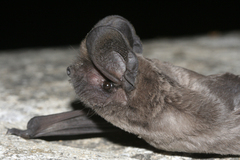

The animals people record most often in Monaco include the European Free-tailed Bat, the Yellow-legged Gull, the Rock Pigeon, the Eurasian Collared-Dove, the Common Wall Lizard and the White Sea Bream. The most recorded plant is red valerian.
Most recorded here
The species with the most research-grade observations on iNaturalist, and how many each has. Most recorded doesn't mean native.
Birds
- Yellow-legged Gull Larus michahellis223
- Rock Pigeon Columba livia68
- Eurasian Collared-Dove Streptopelia decaocto66
- Mallard Anas platyrhynchos39
 Eurasian Blackbird Turdus merula38
- House Sparrow Passer domesticus26
- European Robin Erithacus rubecula16
- Egyptian Goose Alopochen aegyptiaca16
 Carrion Crow Corvus corone15
 Eurasian Blackcap Sylvia atricapilla14
Plants
 Red Valerian Centranthus ruber50
 Pellitory-of-the-wall Parietaria judaica31
- Tree spurge Euphorbia dendroides31
- 27
 27
- Ivy-leaved toadflax Cymbalaria muralis25
- Mediterranean buckthorn Rhamnus alaternus25
 Rock samphire Crithmum maritimum23
 Spiny Asparagus Asparagus acutifolius23
 Field Elm Ulmus minor22
Insects
- Mediterranean Acrobat Ant Crematogaster scutellaris17
- Eurasian Hummingbird Hawkmoth Macroglossum stellatarum11
- Western Honey Bee Apis mellifera10
- Yellow-legged Hornet Vespa velutina10
 Buff-tailed Bumble Bee Bombus terrestris9
 Nomad Sympetrum fonscolombii7
 Broad Scarlet Crocothemis erythraea6
 Lang's Short-tailed Blue Leptotes pirithous5
- Mealybug Destroyer Cryptolaemus montrouzieri4
 Palm Moth Paysandisia archon4
Spiders and kin
 False Black Widow Steatoda grossa2
 Tropical Tent-web Spider Cyrtophora citricola2
- Half-edged Wall Jumping Spider Menemerus semilimbatus2
- Beardfooted spider Saitis barbipes2
- Long-bodied Cellar Spider Pholcus phalangioides1
 Napoleon Spider Synema globosum1
 Common Hairy Field Spider Neoscona subfusca1
Reptiles
- Common Wall Lizard Podarcis muralis36
 Moorish Gecko Tarentola mauritanica13
 Mediterranean House Gecko Hemidactylus turcicus6
 Pond Slider Trachemys scripta5
- Italian Wall Lizard Podarcis siculus1
Fish
 White Sea Bream Diplodus sargus22
- Mediterranean Damselfish Chromis chromis21
 Black-faced Blenny Tripterygion delaisi19
 Saddled Seabream Oblada melanurus16
 Salema Porgy Sarpa salpa15
 Painted Comber Serranus scriba15
 Brown Meagre Sciaena umbra15
 Red Scorpionfish Scorpaena scrofa13
 Incognito Goby Gobius incognitus13
 Dusky Grouper Epinephelus marginatus12
Mollusks
 Cratena Slug Cratena peregrina18
- Mediterranean Violet Aeolid Flabellina affinis6
 Tricolored Felimare Felimare tricolor6
 Spindle Euthria Euthria cornea4
 Leopard Sea Slug Peltodoris atromaculata4
 4
- Common Octopus Octopus vulgaris3
 3
 Noble Pen Shell Pinna nobilis3
 3
How a trip works
A trip has its own trail of lessons: meet six species, match them to new photos, then practice with four choices. Species you learn go into your Fieldbook, and starting a trip earns its Passport stamp. Your home place stays as it is.
Your first lesson starts right away, with real photos. Free, no sign-up.
Species lists and counts from research-grade observations on iNaturalist, as of November 2026. Free, with no ads, no account, and no purchases.
Photo credits
Eurasian Blackbird: (c) Luiz Lapa, CC BY; Carrion Crow: (c) Eidiu, CC BY-NC; Eurasian Blackcap: (c) Marina Ribeiro, CC BY-NC; Red Valerian: (c) Marie-Lan Nguyen, CC BY; Pellitory-of-the-wall: (c) jaigol, CC BY-NC; Phagnalon sordidum: (c) Yves Bas, CC BY; Rock samphire: (c) Leif Fryle, CC BY-NC; Spiny Asparagus: (c) Jens Thalund, CC BY-NC; Field Elm: (c) faluke, CC BY-NC; Buff-tailed Bumble Bee: (c) Thijs Valkenburg, CC BY-NC; Nomad: (c) elisabraz, CC BY-NC; Broad Scarlet: (c) Erland Refling Nielsen, CC BY-NC; Lang's Short-tailed Blue: (c) Pavel Vojtek, CC BY-NC; Palm Moth: (c) Laurent Barthe, CC BY-NC; False Black Widow: (c) Mike Lusk, CC BY-NC; Tropical Tent-web Spider: (c) Andrés E. Ríos Saldaña, CC BY-NC; Napoleon Spider: (c) Gilberto Sánchez Jardón, CC BY-NC; Common Hairy Field Spider: (c) Yannick Juvé, CC BY-NC; Moorish Gecko: (c) Associação Vita Nativa, CC BY-NC; Mediterranean House Gecko: (c) Ty Smith, CC BY-NC; Pond Slider: iNaturalist contributor, CC0; White Sea Bream: (c) Antoni López-Arenas i Cama, CC BY-NC; Black-faced Blenny: (c) whodden, CC BY-NC; Saddled Seabream: (c) whodden, CC BY-NC; Salema Porgy: (c) Guido and Carrara family, CC BY; Painted Comber: (c) Luis P. B., CC BY-NC; Brown Meagre: (c) Sylvain Le Bris, CC BY-NC; Red Scorpionfish: (c) luismartinezartola, CC BY-NC; Incognito Goby: (c) Roberto Pillon, CC BY-NC; Dusky Grouper: (c) Billy Bensted-Smith, CC BY-NC; Cratena Slug: (c) Eric Burgers, CC BY-NC; Tricolored Felimare: (c) Stefan, CC BY-NC; Spindle Euthria: (c) whodden, CC BY-NC; Leopard Sea Slug: (c) jim-anderson, CC BY-NC; Caloria quatrefagesi: (c) Emmanouil Darakis, CC BY-NC; Solatopupa similis: (c) Simon, CC BY-NC; Noble Pen Shell: (c) Julien Renoult, CC BY; Thuridilla hopei: (c) whodden, CC BY-NC; European Free-tailed Bat: (c) Vincent Rufray, CC BY-NC. Photos from iNaturalist, used under their Creative Commons licenses.