Learn the wildlife of the Páramos of South America
Colombia · Ecuador · Venezuela
Phe Páramos of South America is one of E.O. Wilson's Key Places, irreplaceable for life on Earth. 4,936 species have research-grade observations there on iNaturalist, and KnowKi turns the most recorded into short lessons with real photos.
Meet the mammals of the Páramos of South America →Your first lesson starts right away, with real photos. Free, no sign-up.
What animals live in the Páramos of South America?

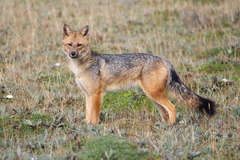

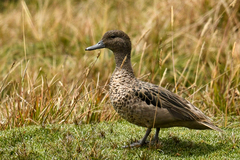


The animals people record most often in the Páramos of South America include the White-tailed Deer, the Andean Tapeti, the Culpeo, the Carunculated Caracara, the Plumbeous Sierra Finch, the Andean Teal, the Andean Red Bumble Bee and the Gray-backed Bumble Bee. The most recorded plant is chuquiragua.
Most recorded here
The species with the most research-grade observations on iNaturalist, and how many each has. Most recorded doesn't mean native.
Birds
- Carunculated Caracara Daptrius carunculatus1,397
 Plumbeous Sierra Finch Geospizopsis unicolor1,331
 Andean Teal Anas andium725
 Andean Condor Vultur gryphus682
- Stout-billed Cinclodes Cinclodes excelsior659
 Chestnut-winged Cinclodes Cinclodes albidiventris654
 Great Thrush Turdus fuscater651
 Tawny Antpitta Grallaria quitensis626
- Andean Gull Chroicocephalus serranus626
- Brown-backed Chat-Tyrant Ochthoeca fumicolor495
Plants
 Chuquiragua Chuquiraga jussieui2,081
 Chikku Chikku Hypochaeris sessiliflora1,569
 1,457
- Cacalote Gaultheria myrsinoides1,335
 1,093
 1,030
 868
 786
 Water mattress Plantago rigida758
 718
Mammals
 White-tailed Deer Odocoileus virginianus1,368
- Andean Tapeti Sylvilagus andinus657
 Culpeo Lycalopex culpaeus574
- Spectacled Bear Tremarctos ornatus280
 Vicuña Lama vicugna259
 Domestic Horse Equus caballus112
 Llama Lama glama76
- Brazilian Guinea Pig Cavia aperea60
 Mountain Tapir Tapirus pinchaque49
 Alpaca Lama pacos42
Insects
 Andean Red Bumble Bee Bombus rubicundus392
 Gray-backed Bumble Bee Bombus funebris317
- Western Honey Bee Apis mellifera143
- 114
- Andean Gardener Bumble Bee Bombus hortulanus78
 Black Witch Ascalapha odorata75
- Andean Silverspot Dione glycera67
 51
 46
- 46
Reptiles
- Günther's Whorltail Iguana Stenocercus guentheri80
- Duméril's Whorltail Iguana Stenocercus trachycephalus70
 Blemished Anole Anolis mariarum60
- Flat Andes Anole Anolis heterodermus44
- Bogotá Anadia Anadia bogotensis39
- Flat Andes Anole Anolis richteri35
Amphibians
- Green Dotted Tree Frog Dendropsophus molitor71
- Lynch's Colombian Tree Frog Hyloscirtus lynchi43
 Riobamba Pouched Frog Gastrotheca riobambae32
- Bogota Robber Frog Pristimantis bogotensis32
- Elegant Robber Frog Pristimantis elegans31
How a trip works
A trip has its own trail of lessons: meet six species, match them to new photos, then practice with four choices. Species you learn go into your Fieldbook, and starting a trip earns its Passport stamp. Your home place stays as it is.
Your first lesson starts right away, with real photos. Free, no sign-up.
Species lists and counts from research-grade observations on iNaturalist, as of November 2026. KnowKi is not affiliated with the E.O. Wilson Biodiversity Foundation. Free, with no ads, no account, and no purchases.
Photo credits
Plumbeous Sierra Finch: (c) Luca Boscain, CC BY-NC; Andean Teal: (c) Maryse, CC BY-NC; Andean Condor: (c) heikkih, CC BY-NC; Chestnut-winged Cinclodes: (c) Christoph Moning, CC BY; Great Thrush: (c) brewmaster, CC BY-NC; Tawny Antpitta: (c) cello caruso-turiello, CC BY; Chuquiragua: (c) Wolfgang Jauch, CC BY; Chikku Chikku: (c) Frank Dietze, CC BY; Gentiana sedifolia: (c) Leyla Cárdenas, CC BY-NC; Gentianella cerastioides: (c) Greg Lasley, CC BY-NC; Rockhausenia nubigena: (c) Amelia Ryan, CC BY-NC; Hypericum laricifolium: (c) osoandino, CC BY-NC; Valeriana microphylla: (c) David Bell, CC BY-NC; Water mattress: (c) Paúl Gonzáles, CC BY; Espeletia grandiflora: (c) montedeagua-lanaranja, CC BY-NC; White-tailed Deer: (c) jefferykarafa, CC BY-NC; Culpeo: (c) Bryan Israel Vásquez Méndez, CC BY-NC; Vicuña: (c) Thomas Fuhrmann, CC BY-NC; Domestic Horse: (c) copper, CC BY-NC; Llama: (c) Mattia, CC BY-NC; Mountain Tapir: (c) Robert Gowan, CC BY-NC; Alpaca: (c) Bernd Dietrich, CC BY-NC; Andean Red Bumble Bee: (c) Daniel Cahen, CC BY; Gray-backed Bumble Bee: (c) javichinga, CC BY-NC; Black Witch: (c) Katja Schulz, CC BY; Astylus bourgeoisi: (c) Felipe Campos, CC BY-NC; Paramastax duquei: (c) Lida Garcia Trujillo, CC BY-NC; Blemished Anole: (c) portioid, CC BY; Riobamba Pouched Frog: (c) osoandino, CC BY-NC. Photos from iNaturalist, used under their Creative Commons licenses.