Learn the wildlife of national parks
Learn the wildlife of Chapada Diamantina National Park
Brazil
639 species have research-grade observations inside Chapada Diamantina National Park on iNaturalist. KnowKi turns the most recorded into short lessons with real photos, so you know what you're looking at before you go.
Meet the birds of Chapada Diamantina National Park →Your first lesson starts right away, with real photos. Free, no sign-up.
What animals live in Chapada Diamantina National Park?

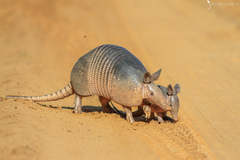
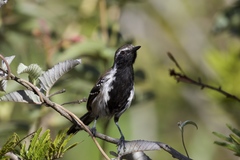


The animals people record most often in Chapada Diamantina National Park include the Rock Cavy, the Black-tufted-ear Marmoset, the Southern Long-nosed Armadillo, the Sincorá Antwren, the Pale-throated Pampa-Finch, the Gilt-edged Tanager, the Striped Lava Lizard and the Violet-winged Grasshopper. The most recorded plant is Drosera tomentosa.
Most recorded here
The species with the most research-grade observations on iNaturalist, and how many each has. Most recorded doesn't mean native.
Birds
 Sincorá Antwren Formicivora grantsaui32
 Pale-throated Pampa-Finch Embernagra longicauda25
- Gilt-edged Tanager Tangara cyanoventris18
 Rufous-collared Sparrow Zonotrichia capensis17
 Rufous-winged Antshrike Thamnophilus torquatus16
 Diamantina Tapaculo Scytalopus diamantinensis14
 Hooded Visorbearer Augastes lumachella13
- Cinnamon Tanager Schistochlamys ruficapillus13
 Velvety Black-Tyrant Knipolegus nigerrimus11
- White-vented Violetear Colibri serrirostris10
Plants
 32
- 28
 26
- 26
- 22
 21
 21
 19
- 17
- 16
Mammals
- Rock Cavy Kerodon rupestris24
 Black-tufted-ear Marmoset Callithrix penicillata3
 Southern Long-nosed Armadillo Dasypus novemcinctus2
- Buff-headed Capuchin Sapajus xanthosternos2
 White-eared Opossum Didelphis albiventris1
- Common Tapeti Sylvilagus brasiliensis1
- Blonde Titi Callicebus barbarabrownae1
 Southern Tamandua Tamandua tetradactyla1
 Capybara Hydrochoerus hydrochaeris1
Insects
- Violet-winged Grasshopper Tropidacris collaris24
- White Angled-Sulphur Anteos clorinde5
 Hanno Blue Hemiargus hanno4
- 4
- 4
 Tetrio Sphinx Pseudosphinx tetrio3
 Southern Monarch Danaus erippus3
- Spiny-legged Stingless bee Trigona spinipes3
 3
- Western Honey Bee Apis mellifera2
Spiders and kin
 3
 3
 Brazilian Blue Tarantula Lasiocyano sazimai3
 2
 South American Black Widow Latrodectus curacaviensis2
- 2
 Spinybacked Orbweaver Gasteracantha cancriformis1
- Brazilian Wandering Spider Phoneutria nigriventer1
- Silver Garden Orbweaver Argiope argentata1
 1
Reptiles
 Striped Lava Lizard Tropidurus semitaeniatus56
- Chapada Diamantina Sipo Chironius diamantina16
 Caetité Coral Snake Micrurus janisrozei10
 8
 Neotropical Rattlesnake Crotalus durissus7
 Boa Constrictor Boa constrictor6
 Whitetail Lancehead Bothrops leucurus6
- Chicken Snake Spilotes pullatus4
 Peters' Lava Lizard Tropidurus hispidus4
 Maryellen's Ground Snake Erythrolamprus maryellenae4
Amphibians
- Striped Toad Rhinella crucifer4
 Cururu Toad Rhinella diptycha4
- 3
 2
- Porto Alegre Golden-eyed Tree Frog Trachycephalus mesophaeus2
 2
 Serra do Sincorá Tree Frog Bokermannohyla itapoty1
 Rio de Lençóis Tree Frog Bokermannohyla oxente1
- Clay Robber Frog Haddadus binotatus1
- Emerald-eyed Tree Frog Boana crepitans1
How a trip works
A trip has its own trail of lessons: meet six species, match them to new photos, then practice with four choices. Species you learn go into your Fieldbook, and starting a trip earns its Passport stamp. Your home place stays as it is.
Your first lesson starts right away, with real photos. Free, no sign-up.
Species lists and counts from research-grade observations on iNaturalist, as of November 2026. Parks outside the U.S. are from the World Database on Protected Areas (UNEP-WCMC and IUCN, Protected Planet). KnowKi is not affiliated with the National Park Service or any park's managers. Free, with no ads, no account, and no purchases.
Photo credits
Sincorá Antwren: (c) shrike2, CC BY-NC; Pale-throated Pampa-Finch: (c) Steve Foss, CC BY-NC; Rufous-collared Sparrow: (c) Esteban Poveda, CC BY; Rufous-winged Antshrike: (c) Carlos Sanchez, CC BY-NC; Diamantina Tapaculo: (c) Daniel Branch, CC BY-NC; Hooded Visorbearer: (c) Joao Quental, CC BY; Velvety Black-Tyrant: (c) Rob Van Epps, CC BY-NC; Drosera tomentosa: (c) Renan Cassimiro, CC BY-NC; Micranthocereus purpureus: (c) Gabriel Silva Collins, CC BY-NC; Periandra mediterranea: (c) eneaschr, CC BY-NC; Cuphea ericoides: (c) eneaschr, CC BY-NC; Utricularia flaccida: (c) Sidnei Sampaio, CC BY-NC; Black-tufted-ear Marmoset: (c) Ouwesok, CC BY-NC; Southern Long-nosed Armadillo: (c) javierluque89, CC BY-NC; White-eared Opossum: (c) Thiago Chagas, CC BY-NC; Southern Tamandua: (c) Instituto Últimos Refúgios, CC BY-NC; Capybara: (c) Carlos Sanchez, CC BY-NC; Hanno Blue: (c) Vitor C. Dias Gonçalves, CC BY-NC; Tetrio Sphinx: (c) Biodiversidad urbana zona metropolitana Hidalgo, CC BY-NC; Southern Monarch: (c) SentirParaVer, CC BY-NC; Euselasia thucydides: (c) Ken Kertell, CC BY-NC; Aglaoctenus lagotis: (c) hjustin, CC BY-NC; Tityus kuryi: (c) Rafael M R Serra, CC BY; Brazilian Blue Tarantula: (c) Thiago Gonçalves Coronado Antunes, CC BY-NC; Peucetia rubrolineata: (c) Jean Martins, CC BY; South American Black Widow: (c) Darío Hernando Gutiérrez Galvis, CC BY-NC; Spinybacked Orbweaver: (c) kenbuchholz, CC BY-NC; Alpaida truncata: (c) Alessandher Piva, CC BY; Striped Lava Lizard: (c) Célio Moura Neto, CC BY-NC; Caetité Coral Snake: (c) Gabriel de Jesus Mercês, CC BY-NC; Enyalius erythroceneus: (c) Marco Aurelio de Sena, CC BY-NC; Neotropical Rattlesnake: (c) Lucas Botelho, CC BY-NC; Boa Constrictor: (c) nicolas burnel, CC BY-NC; Whitetail Lancehead: (c) Tito, CC BY-NC; Peters' Lava Lizard: (c) Pedro Ivo, CC BY-NC; Maryellen's Ground Snake: (c) Reuber Brandão, CC BY-NC; Cururu Toad: (c) Luis Felipe Mayorga, CC BY-NC; Phyllomedusa bahiana: (c) Lucas Botelho, CC BY-NC; Haddadus aramunha: (c) Diego Santana, CC BY-NC; Serra do Sincorá Tree Frog: (c) Caio Crelier, CC BY; Rio de Lençóis Tree Frog: (c) Lucas Botelho, CC BY-NC. Photos from iNaturalist, used under their Creative Commons licenses.