Learn the wildlife of national parks
Learn the wildlife of Chingaza National Park
Colombia
445 species have research-grade observations inside Chingaza National Park on iNaturalist. KnowKi turns the most recorded into short lessons with real photos, so you know what you're looking at before you go.
Meet the birds of Chingaza National Park →Your first lesson starts right away, with real photos. Free, no sign-up.
What animals live in Chingaza National Park?

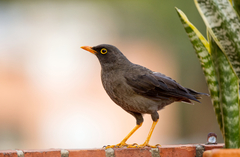
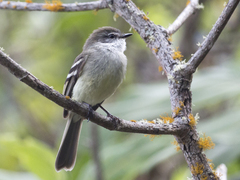

The animals people record most often in Chingaza National Park include the White-tailed Deer, the Spectacled Bear, the Brazilian Guinea Pig, the Great Thrush, the Andean Guan, the White-throated Tyrannulet, the Andean Red Bumble Bee and Astylus aulicus. The most recorded plant is Espeletia grandiflora.
Most recorded here
The species with the most research-grade observations on iNaturalist, and how many each has. Most recorded doesn't mean native.
Birds
 Great Thrush Turdus fuscater37
- Andean Guan Penelope montagnii30
 White-throated Tyrannulet Mecocerculus leucophrys30
- Black-chested Buzzard-Eagle Geranoaetus melanoleucus27
- Scarlet-bellied Mountain-Tanager Anisognathus igniventris24
 Rufous-browed Conebill Conirostrum rufum19
 Pale-naped Brushfinch Atlapetes pallidinucha19
- Bronze-tailed Thornbill Chalcostigma heteropogon18
- Golden-fronted Whitestart Myioborus ornatus18
- Rufous Wren Cinnycerthia unirufa16
Plants
 189
 59
 47
- 34
- 33
- Cacalote Gaultheria myrsinoides32
- 30
 30
- 29
 28
Mammals
 White-tailed Deer Odocoileus virginianus250
- Spectacled Bear Tremarctos ornatus34
- Brazilian Guinea Pig Cavia aperea9
- North Andean Red Brocket Andinocervus rufinus3
 Mountain Lion Puma concolor2
- Geoffroy's tailless bat Anoura geoffroyi1
 Central Neotropical River Otter Lontra longicaudis1
- Common Tapeti Sylvilagus brasiliensis1
 Domestic Horse Equus caballus1
Insects
 Andean Red Bumble Bee Bombus rubicundus49
- 15
- Dimera Sulphur Colias dimera5
- 4
- Western Honey Bee Apis mellifera3
 Gray-backed Bumble Bee Bombus funebris3
 Pink-spotted Hawkmoth Agrius cingulata2
 2
 2
 Brazilian Lady Vanessa braziliensis1
Spiders and kin
 False Black Widow Steatoda grossa1
 1
 1
 1
 1
Reptiles
- Flat Andes Anole Anolis heterodermus12
- Duméril's Whorltail Iguana Stenocercus trachycephalus8
- Striped Lightbulb Lizard Riama striata7
- Bogotá Anadia Anadia bogotensis1
- Common Lancehead Bothrops atrox1
 1
Amphibians
- Green Dotted Tree Frog Dendropsophus molitor12
- Bogota Robber Frog Pristimantis bogotensis6
- Elegant Robber Frog Pristimantis elegans2
 2
- Lynch's Stubfoot Toad Atelopus lozanoi1
How a trip works
A trip has its own trail of lessons: meet six species, match them to new photos, then practice with four choices. Species you learn go into your Fieldbook, and starting a trip earns its Passport stamp. Your home place stays as it is.
Your first lesson starts right away, with real photos. Free, no sign-up.
Species lists and counts from research-grade observations on iNaturalist, as of November 2026. Parks outside the U.S. are from the World Database on Protected Areas (UNEP-WCMC and IUCN, Protected Planet). KnowKi is not affiliated with the National Park Service or any park's managers. Free, with no ads, no account, and no purchases.
Photo credits
Great Thrush: (c) brewmaster, CC BY-NC; White-throated Tyrannulet: (c) Oswaldo Hernández, CC BY-NC; Rufous-browed Conebill: (c) Christoph Moning, CC BY; Pale-naped Brushfinch: (c) Christoph Moning, CC BY; Espeletia grandiflora: (c) montedeagua-lanaranja, CC BY-NC; Espeletia argentea: (c) Diego Amaya, CC BY-NC; Eryngium humboldtii: (c) Diego Amaya, CC BY-NC; Linochilus phylicoides: (c) GERMAN LEONEL SARMIENTO CRUZ, CC BY; Puya goudotiana: (c) Diego Amaya, CC BY-NC; White-tailed Deer: (c) jefferykarafa, CC BY-NC; Mountain Lion: (c) pfaucher, CC BY-NC; Central Neotropical River Otter: (c) Dan Vickers, CC BY; Domestic Horse: (c) copper, CC BY-NC; Andean Red Bumble Bee: (c) Daniel Cahen, CC BY; Gray-backed Bumble Bee: (c) javichinga, CC BY-NC; Pink-spotted Hawkmoth: (c) Jack Cochran, CC BY-NC; Pityeja histrionaria: (c) Carlos Pérez Peña, CC BY-NC; Paracatua rubrolimbata: (c) William Rincón, CC BY-NC; Brazilian Lady: (c) Nicolas Olejnik, CC BY; False Black Widow: (c) Mike Lusk, CC BY-NC; Phareus raptator: (c) Ken-ichi Ueda, CC BY; Rhaucus quinquelineatus: (c) Gonzalo Giribet, CC BY-NC; Rhaucus serripes: (c) Teodoro Chivatá Bedoya, CC BY-NC; Tropicosa thorelli: (c) Nicolás Baresch Uribe, CC BY; Bothrocophias myrringae: (c) Ronald Alessandro Díaz-Flórez, CC BY-NC; Pristimantis nervicus: iNaturalist contributor, CC0. Photos from iNaturalist, used under their Creative Commons licenses.