Learn the wildlife of national parks
Learn the wildlife of El Rey National Park
Argentina
305 species have research-grade observations inside El Rey National Park on iNaturalist. KnowKi turns the most recorded into short lessons with real photos, so you know what you're looking at before you go.
Meet the birds of El Rey National Park →Your first lesson starts right away, with real photos. Free, no sign-up.
What animals live in El Rey National Park?
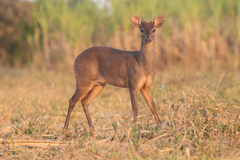
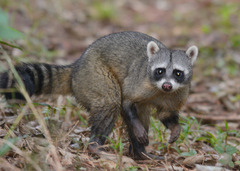

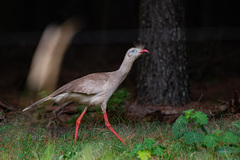


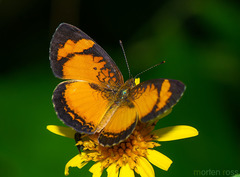
The animals people record most often in El Rey National Park include the Southern Brown Brocket, the Crab-eating Raccoon, the Southern Tamandua, the Red-legged Seriema, the Yungas Guan, the Scaly-headed Parrot, the Cyan Emperor and Ortilia gentina. The most recorded plant is brazilian vaseplant.
Most recorded here
The species with the most research-grade observations on iNaturalist, and how many each has. Most recorded doesn't mean native.
Birds
 Red-legged Seriema Cariama cristata34
 Yungas Guan Penelope bridgesi32
 Scaly-headed Parrot Pionus maximiliani15
 Plush-crested Jay Cyanocorax chrysops12
 Buff-necked Ibis Theristicus caudatus10
 Rufous-bellied Thrush Turdus rufiventris9
- Crested Oropendola Psarocolius decumanus8
- Green-cheeked Parakeet Pyrrhura molinae8
 Picazuro Pigeon Patagioenas picazuro6
 Roadside Hawk Rupornis magnirostris6
Plants
 Brazilian vaseplant Aechmea distichantha14
 Tropical milkweed Asclepias curassavica5
 Tree tobacco Nicotiana glauca4
 4
 Herzog cestrum Lycium cestroides4
 4
- 3
- Mock strawberry Potentilla indica3
 Southern Giant Horsetail Equisetum giganteum3
 3
Mammals
 Southern Brown Brocket Subulo gouazoubira11
 Crab-eating Raccoon Procyon cancrivorus4
 Southern Tamandua Tamandua tetradactyla2
- Agile Gracile Opossum Gracilinanus agilis1
- Common Tapeti Sylvilagus brasiliensis1
Insects
 Cyan Emperor Doxocopa cyane21
 13
- 13
 11
 Thoas Swallowtail Heraclides thoas7
 Southern Guava Skipper Phocides polybius6
- Ithra Crescent Ortilia ithra6
 5
 5
- Southern Sicklewing Eantis thraso5
Spiders and kin
 3
 2
 Brown Widow Latrodectus geometricus1
- Brazilian Wandering Spider Phoneutria nigriventer1
 Common House Spider Parasteatoda tepidariorum1
- Cayenne Tick Amblyomma cajennense1
Reptiles
 Schreibers' Many-fingered Teiid Cercosaura schreibersii2
- Brazilian Green Racer Philodryas aestiva2
- Jan's Green Racer Philodryas varia1
- Brown Leaf Lizard Stenocercus caducus1
 Wagler's Snake Xenodon merremii1
Amphibians
 Argentine Toad Rhinella arenarum2
 Cururu Toad Rhinella diptycha2
 Fuscous-blotched Snouted Tree Frog Scinax fuscovarius1
- Rioja Tree Frog Boana riojana1
How a trip works
A trip has its own trail of lessons: meet six species, match them to new photos, then practice with four choices. Species you learn go into your Fieldbook, and starting a trip earns its Passport stamp. Your home place stays as it is.
Your first lesson starts right away, with real photos. Free, no sign-up.
Species lists and counts from research-grade observations on iNaturalist, as of November 2026. Parks outside the U.S. are from the World Database on Protected Areas (UNEP-WCMC and IUCN, Protected Planet). KnowKi is not affiliated with the National Park Service or any park's managers. Free, with no ads, no account, and no purchases.
Photo credits
Red-legged Seriema: (c) Mauricio Silvera, CC BY-NC; Yungas Guan: (c) Gonzalo, CC BY-NC; Scaly-headed Parrot: (c) David Rodriguez, CC BY-NC; Plush-crested Jay: (c) abelardomendesjr, CC BY-NC; Buff-necked Ibis: (c) Greg Lasley, CC BY-NC; Rufous-bellied Thrush: (c) Nigel Voaden, CC BY; Picazuro Pigeon: (c) Pablo Balduvino, CC BY-NC; Roadside Hawk: (c) floris_heemskerk, CC BY-NC; Brazilian vaseplant: (c) Luís Roberto da Silva, CC BY-NC; Tropical milkweed: (c) Ricard Busquets Reverte, CC BY; Tree tobacco: (c) Thorny Toad Photography, CC BY-NC; Ruellia erythropus: (c) Martin Arregui, CC BY-NC; Herzog cestrum: (c) tierraentremismanos, CC BY-NC; Aphelandra hieronymi: (c) HUGO DAVID CAVERZASI, CC BY-NC; Southern Giant Horsetail: (c) teresap, CC BY-NC; Pfeiffera monacantha: (c) Martin Arregui, CC BY-NC; Southern Brown Brocket: (c) Daniel Branch, CC BY-NC; Crab-eating Raccoon: (c) Rodrigo M. Ferronato, CC BY-NC; Southern Tamandua: (c) Instituto Últimos Refúgios, CC BY-NC; Cyan Emperor: (c) juandiegoflo, CC BY-NC; Ortilia gentina: (c) Morten Ross, CC BY; Telenassa berenice: (c) Carlos Schmidtutz, CC BY-NC; Thoas Swallowtail: (c) Clarice Dorocinski, CC BY; Southern Guava Skipper: iNaturalist contributor, CC0; Mnesarete grisea: (c) Carlos Schmidtutz, CC BY-NC; Argia joergenseni: (c) Lucas Rubio, CC BY; Centroctenus brevipes: (c) Nicolas Olejnik, CC BY; Aglaoctenus lagotis: (c) hjustin, CC BY-NC; Brown Widow: (c) Wayne Fidler, CC BY-NC; Common House Spider: (c) Nikola Szucsich, CC BY-NC; Schreibers' Many-fingered Teiid: (c) Bruno Reis Dotto, CC BY-NC; Wagler's Snake: (c) Henrique C. Costa, CC BY-NC; Argentine Toad: (c) Tomás Carranza Perales, CC BY; Cururu Toad: (c) Luis Felipe Mayorga, CC BY-NC; Fuscous-blotched Snouted Tree Frog: (c) Pedro Ivo, CC BY-NC. Photos from iNaturalist, used under their Creative Commons licenses.