Learn the wildlife of national parks
Learn the wildlife of Emas National Park
Brazil
455 species have research-grade observations inside Emas National Park on iNaturalist. KnowKi turns the most recorded into short lessons with real photos, so you know what you're looking at before you go.
Meet the mammals of Emas National Park →Your first lesson starts right away, with real photos. Free, no sign-up.
What animals live in Emas National Park?
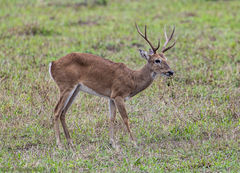

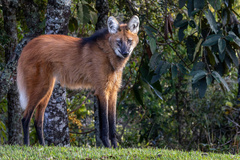
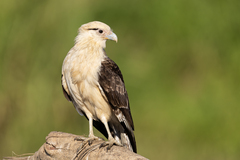
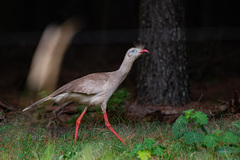
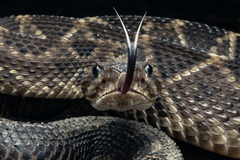
The animals people record most often in Emas National Park include the Pampas Deer, the Crab-eating Fox, the Maned Wolf, the Curl-crested Jay, the Yellow-headed Caracara, the Red-legged Seriema, the Neotropical Rattlesnake and the Argentine Black-and-white Tegu. The most recorded plant is Calliandra dysantha.
Most recorded here
The species with the most research-grade observations on iNaturalist, and how many each has. Most recorded doesn't mean native.
Birds
- Curl-crested Jay Cyanocorax cristatellus33
 Yellow-headed Caracara Daptrius chimachima33
 Red-legged Seriema Cariama cristata25
 White-tailed Hawk Geranoaetus albicaudatus24
- Saffron Finch Sicalis flaveola18
- Chopí Blackbird Gnorimopsar chopi18
 Greater Rhea Rhea americana17
 Streamer-tailed Tyrant Gubernetes yetapa16
 Crested Caracara Caracara plancus15
 Whistling Heron Syrigma sibilatrix15
Plants
 14
 Moriche palm Mauritia flexuosa9
 8
- 8
- Sore-mouth bush Palicourea tomentosa8
- 7
- 6
- 6
- 4
- 4
Mammals
 Pampas Deer Ozotoceros bezoarticus29
 Crab-eating Fox Cerdocyon thous25
 Maned Wolf Chrysocyon brachyurus16
 South American Tapir Tapirus terrestris11
- Amazon Hog-nosed Skunk Conepatus amazonicus11
- Azara's Agouti Dasyprocta azarae10
 Hoary Fox Lycalopex vetula9
 White-lipped Peccary Tayassu pecari8
- Six-banded Armadillo Euphractus sexcinctus7
 Cerrado Naked-tailed Armadillo Cabassous squamicaudis7
Insects
 7
 6
 Fadus Sphinx Aellopos fadus4
 Clearspot Bluewing Zenithoptera lanei4
- Many-banded Skipper Timochares trifasciata4
 Banded Lady Vanessa myrinna4
 4
 Veined White-Skipper Heliopetes arsalte3
 Variable Cracker Hamadryas feronia3
 Red-eyed Planthopper Lystra lanata3
Spiders and kin
 5
- 4
- 3
- Gray Wall Jumping Spider Menemerus bivittatus1
- 1
 1
 1
Reptiles
 Neotropical Rattlesnake Crotalus durissus26
- Argentine Black-and-white Tegu Salvator merianae25
 Cerrado Lancehead Bothrops pauloensis19
- Yellow Tegu Salvator duseni12
 Boa Constrictor Boa constrictor11
- Giant Ameiva Ameiva ameiva11
 Urutu Lancehead Bothrops alternatus10
 Brazilian Lancehead Bothrops moojeni8
- Brazilian Green Racer Philodryas aestiva8
- Green Anaconda Eunectes murinus6
Amphibians
 Cururu Toad Rhinella diptycha6
- Pepper Frog Leptodactylus labyrinthicus5
 Fuscous-blotched Snouted Tree Frog Scinax fuscovarius4
- Rio Pardo Tree Frog Dendropsophus cerradensis2
- Rusty Toad Rhinella rubescens1
 Cuyaba Dwarf Frog Physalaemus nattereri1
- Araguari Tree Frog Boana paranaiba1
How a trip works
A trip has its own trail of lessons: meet six species, match them to new photos, then practice with four choices. Species you learn go into your Fieldbook, and starting a trip earns its Passport stamp. Your home place stays as it is.
Your first lesson starts right away, with real photos. Free, no sign-up.
Species lists and counts from research-grade observations on iNaturalist, as of November 2026. Parks outside the U.S. are from the World Database on Protected Areas (UNEP-WCMC and IUCN, Protected Planet). KnowKi is not affiliated with the National Park Service or any park's managers. Free, with no ads, no account, and no purchases.
Photo credits
Yellow-headed Caracara: (c) Manuel Raab, CC BY-NC; Red-legged Seriema: (c) Mauricio Silvera, CC BY-NC; White-tailed Hawk: (c) Greg Lasley, CC BY-NC; Greater Rhea: (c) Martin Arregui, CC BY-NC; Streamer-tailed Tyrant: (c) Márcio Alves Cardoso, CC BY-NC; Crested Caracara: (c) Juan Cruzado Cortés, CC BY; Whistling Heron: (c) Oswaldo Hernández, CC BY-NC; Calliandra dysantha: (c) Claudia Barros, CC BY-NC; Moriche palm: (c) Paul Donahue, CC BY-NC; Palicourea rigida: (c) Eric Fischer Rempe, CC BY-NC; Pampas Deer: (c) leealloway, CC BY-NC; Crab-eating Fox: iNaturalist contributor, CC0; Maned Wolf: (c) Leandro Rezende, CC BY-NC; South American Tapir: (c) Robin Gwen Agarwal, CC BY-NC; Hoary Fox: (c) KENNEDY BORGES, CC BY-NC; White-lipped Peccary: (c) Cameron Eckert, CC BY-NC; Cerrado Naked-tailed Armadillo: (c) KENNEDY BORGES, CC BY-NC; Pyrearinus termitilluminans: (c) Norton Santos, CC BY-NC; Corydalus diasi: (c) Kauê Teles, CC BY-NC; Fadus Sphinx: iNaturalist contributor, CC0; Clearspot Bluewing: (c) Victor Mozqueda, CC BY-NC; Banded Lady: (c) daniesser, CC BY-NC; Xestotrachelus robustus: (c) Romilson Silva Lopes Junior, CC BY; Veined White-Skipper: (c) shirdipam, CC BY-NC; Variable Cracker: (c) djhiker, CC BY-NC; Red-eyed Planthopper: (c) Santiago Mailhos, CC BY-NC; Parawixia bistriata: (c) Esteban Diego Koch, CC BY-NC; Nhandu cerradensis: (c) Jean Martins, CC BY; Harmonicon candango: (c) Jean Martins, CC BY; Neotropical Rattlesnake: (c) Lucas Botelho, CC BY-NC; Cerrado Lancehead: (c) Thiago RBM, CC BY-NC; Boa Constrictor: (c) nicolas burnel, CC BY-NC; Urutu Lancehead: (c) Bruno Reis Dotto, CC BY-NC; Brazilian Lancehead: (c) Lucas Botelho, CC BY-NC; Cururu Toad: (c) Luis Felipe Mayorga, CC BY-NC; Fuscous-blotched Snouted Tree Frog: (c) Pedro Ivo, CC BY-NC; Cuyaba Dwarf Frog: (c) Lucas Botelho, CC BY-NC. Photos from iNaturalist, used under their Creative Commons licenses.