Learn the wildlife of national parks
Learn the wildlife of Kobuk Valley National Park
AK
124 species have research-grade observations inside Kobuk Valley National Park on iNaturalist. KnowKi turns the most recorded into short lessons with real photos, so you know what you're looking at before you go.
Meet the birds of Kobuk Valley National Park →Your first lesson starts right away, with real photos. Free, no sign-up.
What animals live in Kobuk Valley National Park?


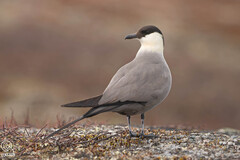
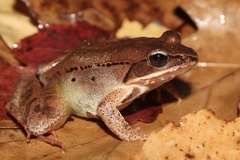

The animals people record most often in Kobuk Valley National Park include the American Black Bear, the Moose, the Gray Wolf, the American Wigeon, the Semipalmated Plover, the Long-tailed Jaeger, the Wood Frog and the Old World Swallowtail. The most recorded plant is kobuk locoweed.
Most recorded here
The species with the most research-grade observations on iNaturalist, and how many each has. Most recorded doesn't mean native.
Birds
- American Wigeon Mareca americana5
 Semipalmated Plover Charadrius semipalmatus4
 Long-tailed Jaeger Stercorarius longicaudus3
- American Golden-Plover Pluvialis dominica3
- Glaucous Gull Larus hyperboreus2
 Red-throated Loon Gavia stellata2
 Tundra Swan Cygnus columbianus2
 Red-breasted Merganser Mergus serrator2
 Pine Grosbeak Pinicola enucleator2
- Yellow-rumped Warbler Setophaga coronata2
Plants
 Kobuk Locoweed Oxytropis kobukensis12
 Dwarf Fireweed Chamaenerion latifolium8
- Arctic Stitchwort Cherleria arctica6
 Boreal Sage Artemisia borealis4
 Dune tansy Tanacetum bipinnatum4
 Jakutsk Snowparsley Cnidium cnidiifolium4
 Northern Pink Dianthus repens4
 Naked-stemmed Wallflower Parrya nudicaulis4
 Moss Campion Silene acaulis3
 Canadian buffalo-berry Shepherdia canadensis3
Mammals
- American Black Bear Ursus americanus8
- Moose Alces alces6
 Gray Wolf Canis lupus5
 Caribou Rangifer tarandus5
 North American River Otter Lontra canadensis3
- Red Fox Vulpes vulpes1
 American Red Squirrel Tamiasciurus hudsonicus1
Insects
 Old World Swallowtail Papilio machaon1
 Canadian Tiger Swallowtail Papilio canadensis1
 Northern Blue Plebejus idas1
- Graphite Arches Melanchra pulverulenta1
- Cryptic Bumble Bee Bombus cryptarum1
- 1
How a trip works
A trip has its own trail of lessons: meet six species, match them to new photos, then practice with four choices. Species you learn go into your Fieldbook, and starting a trip earns its Passport stamp. Your home place stays as it is.
Your first lesson starts right away, with real photos. Free, no sign-up.
Species lists and counts from research-grade observations on iNaturalist, as of November 2026. Parks outside the U.S. are from the World Database on Protected Areas (UNEP-WCMC and IUCN, Protected Planet). KnowKi is not affiliated with the National Park Service or any park's managers. Free, with no ads, no account, and no purchases.
Photo credits
Semipalmated Plover: (c) Donna Pomeroy, CC BY-NC; Long-tailed Jaeger: (c) Erik Eckstein, CC BY-NC; Red-throated Loon: (c) Erik Eckstein, CC BY-NC; Tundra Swan: iNaturalist contributor, CC0; Red-breasted Merganser: (c) Robin Gwen Agarwal, CC BY-NC; Pine Grosbeak: (c) Vasily Kalinichenko, CC BY-NC; Kobuk Locoweed: (c) Kitty LaBounty (deceased), CC BY-NC; Dwarf Fireweed: (c) Kayla Brown, CC BY-NC; Boreal Sage: (c) Pavel Gorbunov, CC BY-NC; Dune tansy: (c) Kate Wynne, CC BY-NC; Jakutsk Snowparsley: (c) Andy Fyon, CC BY-NC; Northern Pink: (c) Artem Oboturov, CC BY-NC; Naked-stemmed Wallflower: (c) Christopher Moore, CC BY-NC; Moss Campion: (c) Katrin Simon, CC BY; Canadian buffalo-berry: (c) bendingtree, CC BY-NC; Gray Wolf: (c) Brian Starzomski, CC BY-NC; Caribou: (c) Bering Land Bridge National Preserve, CC BY; North American River Otter: iNaturalist contributor, CC0; American Red Squirrel: (c) jmarcinik, CC BY-NC; Old World Swallowtail: (c) Martin Grimm, CC BY-NC; Canadian Tiger Swallowtail: (c) Susan Elliott, CC BY-NC; Northern Blue: (c) Antoine Thivolle, CC BY; Wood Frog: (c) Ty Smith, CC BY-NC. Photos from iNaturalist, used under their Creative Commons licenses.