Learn the wildlife of national parks
Learn the wildlife of Tatrzański National Park
Poland
1,390 species have research-grade observations inside Tatrzański National Park on iNaturalist. KnowKi turns the most recorded into short lessons with real photos, so you know what you're looking at before you go.
Meet the birds of Tatrzański National Park →Your first lesson starts right away, with real photos. Free, no sign-up.
What animals live in Tatrzański National Park?
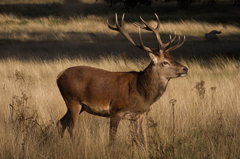


The animals people record most often in Tatrzański National Park include the Red Deer, the Alpine Marmot, the Red Fox, the Northern Nutcracker, the Alpine Accentor, the Common Chaffinch, the Butterbur Weevil and the European Common Frog. The most recorded plant is willow gentian.
Most recorded here
The species with the most research-grade observations on iNaturalist, and how many each has. Most recorded doesn't mean native.
Birds
- Northern Nutcracker Nucifraga caryocatactes133
 Alpine Accentor Prunella collaris123
 Common Chaffinch Fringilla coelebs93
- Mallard Anas platyrhynchos75
- Eurasian Jay Garrulus glandarius72
 White-throated Dipper Cinclus cinclus70
- European Robin Erithacus rubecula59
 Water Pipit Anthus spinoletta53
- Common Raven Corvus corax49
 Grey Wagtail Motacilla cinerea49
Plants
 Willow gentian Gentiana asclepiadea284
 Fireweed Chamaenerion angustifolium226
 Eight-petal Mountain-Avens Dryas octopetala145
 Marsh marigold Caltha palustris142
- Silver Thistle Carlina acaulis142
- 138
 Butterbur Broomrape Orobanche flava134
- Round-headed Rampion Phyteuma orbiculare128
- Norway spruce Picea abies123
 Common bilberry Vaccinium myrtillus123
Mammals
 Red Deer Cervus elaphus141
 Alpine Marmot Marmota marmota44
- Red Fox Vulpes vulpes38
- Eurasian Red Squirrel Sciurus vulgaris15
 Eurasian Beaver Castor fiber12
- European Mole Talpa europaea10
- Western Roe Deer Capreolus capreolus9
 Eurasian Pine Marten Martes martes5
- Northern Chamois Rupicapra rupicapra5
Insects
- Butterbur Weevil Liparus glabrirostris79
 Common Drone Fly Eristalis tenax63
- Carpenter Sawyer Beetle Monochamus sartor51
- Common Carder Bumble Bee Bombus pascuorum50
- Common Froghopper Cercopis vulnerata47
 Wurflen's Bumble Bee Bombus mastrucatus42
- Red Admiral Vanessa atalanta39
 Green Mountain Grasshopper Miramella alpina39
 Silver-washed Fritillary Argynnis paphia36
 Oak Eggar Lasiocampa quercus35
Spiders and kin
 Saddleback Harvestman Mitopus morio34
- Cross Orbweaver Araneus diadematus33
 European cave spider Meta menardi24
 Four-spot Orbweaver Araneus quadratus10
- 9
 Oak Spider Aculepeira ceropegia8
 8
 Shaded Orbweaver Metellina merianae8
 Marbled Orbweaver Araneus marmoreus7
 Window Lace-weaver Amaurobius fenestralis6
Mollusks
- Carpathian Blue Slug Bielzia coerulans40
- 17
 Copse Snail Arianta arbustorum15
 Mountain Bulin Ena montana8
How a trip works
A trip has its own trail of lessons: meet six species, match them to new photos, then practice with four choices. Species you learn go into your Fieldbook, and starting a trip earns its Passport stamp. Your home place stays as it is.
Your first lesson starts right away, with real photos. Free, no sign-up.
Species lists and counts from research-grade observations on iNaturalist, as of November 2026. Parks outside the U.S. are from the World Database on Protected Areas (UNEP-WCMC and IUCN, Protected Planet). KnowKi is not affiliated with the National Park Service or any park's managers. Free, with no ads, no account, and no purchases.
Photo credits
Alpine Accentor: (c) Alessandro, CC BY-NC; Common Chaffinch: (c) Jonny Andrews, CC BY-NC; White-throated Dipper: (c) Dirk-Jan van Roest, CC BY; Water Pipit: (c) Paul Cools, CC BY-NC; Grey Wagtail: (c) kellyr115, CC BY-NC; Willow gentian: (c) Luca Boscain, CC BY-NC; Fireweed: (c) textman, CC BY-NC; Eight-petal Mountain-Avens: (c) William Stephens, CC BY; Marsh marigold: (c) eeyipes, CC BY-NC; Butterbur Broomrape: (c) Dr. Peter Llewellyn, CC BY-NC; Common bilberry: (c) Дмитрий Власов, CC BY-NC; Red Deer: (c) Jon J. Laysell, CC BY-NC; Alpine Marmot: (c) Boris Mittermeier, CC BY-NC; Eurasian Beaver: (c) jamesbot, CC BY-NC; Eurasian Pine Marten: (c) tpa63, CC BY-NC; Common Drone Fly: (c) hobiecat, CC BY-NC; Wurflen's Bumble Bee: (c) Corinna Herr, CC BY-NC; Green Mountain Grasshopper: (c) Per Hoffmann Olsen, CC BY-NC; Silver-washed Fritillary: (c) frahome, CC BY-NC; Oak Eggar: (c) Andrey Ponomarev, CC BY-NC; Saddleback Harvestman: (c) Pascal Dubois, CC BY-NC; European cave spider: (c) Jakob Fahr, CC BY-NC; Four-spot Orbweaver: (c) Jakob Fahr, CC BY-NC; Oak Spider: (c) Kostas Zontanos, CC BY; Callobius claustrarius: (c) Jakub Kałka, CC BY-NC; Shaded Orbweaver: (c) alphis, CC BY-NC; Marbled Orbweaver: (c) Dustin Griffin, CC BY-NC; Window Lace-weaver: (c) Tone Killick, CC BY; Copse Snail: (c) Martin Grimm, CC BY-NC; Mountain Bulin: (c) Felix Riegel, CC BY-NC. Photos from iNaturalist, used under their Creative Commons licenses.