Learn the wildlife of any country
Learn the wildlife of Isle of Man
Europe
1,670 species have research-grade observations in Isle of Man on iNaturalist. KnowKi turns the most recorded into short lessons with real photos, so you can learn a country's wildlife from home.
Meet the mammals of Isle of Man →Your first lesson starts right away, with real photos. Free, no sign-up.
What animals live in Isle of Man?
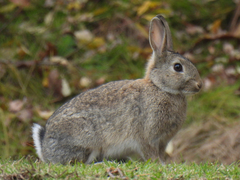


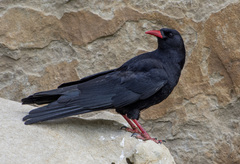
The animals people record most often in Isle of Man include the Grey Seal, the European Rabbit, the Red-necked Wallaby, the European Herring Gull, the Common Eider, the Red-billed Chough, the Meadow Brown and the Red Admiral. The most recorded plant is sea thrift.
Most recorded here
The species with the most research-grade observations on iNaturalist, and how many each has. Most recorded doesn't mean native.
Birds
 European Herring Gull Larus argentatus165
 Common Eider Somateria mollissima142
 Red-billed Chough Pyrrhocorax pyrrhocorax108
 Eurasian Oystercatcher Haematopus ostralegus107
- Mallard Anas platyrhynchos91
 European Stonechat Saxicola rubicola83
 European Shag Gulosus aristotelis80
- Rook Corvus frugilegus78
 Eurasian Jackdaw Coloeus monedula77
 Grey Heron Ardea cinerea74
Plants
- Sea Thrift Armeria maritima118
- Red campion Silene dioica81
 Common heather Calluna vulgaris79
- Bell Heather Erica cinerea74
 Sea Campion Silene uniflora72
 Wall Pennywort Umbilicus rupestris70
 Lesser celandine Ficaria verna68
 Purple foxglove Digitalis purpurea64
 Cuckooflower Cardamine pratensis63
- Lawn daisy Bellis perennis62
Mammals
- Grey Seal Halichoerus grypus122
 European Rabbit Oryctolagus cuniculus42
 Red-necked Wallaby Notamacropus rufogriseus37
- Common Hedgehog Erinaceus europaeus36
- Brown Hare Lepus europaeus19
 Domestic Goat Capra hircus17
- Harbor Seal Phoca vitulina8
- Eurasian Stoat Mustela erminea8
 Brown Rat Rattus norvegicus8
 Harbour Porpoise Phocoena phocoena7
Insects
- Meadow Brown Maniola jurtina95
- Red Admiral Vanessa atalanta92
 Speckled Wood Pararge aegeria89
 Painted Lady Vanessa cardui84
 Seven-spotted Lady Beetle Coccinella septempunctata64
- Small Tortoiseshell Aglais urticae63
- Fox Moth Macrothylacia rubi56
 Cinnabar moth Tyria jacobaeae48
 European Peacock Butterfly Aglais io48
- Small Heath Coenonympha pamphilus42
Spiders and kin
- Cross Orbweaver Araneus diadematus47
- European Nursery Web spider Pisaura mirabilis14
- Long-bodied Cellar Spider Pholcus phalangioides9
Mollusks
- Garden Snail Cornu aspersum35
- Brown-lipped Snail Cepaea nemoralis30
- Common Whelk Buccinum undatum20
 Atlantic Dogwhelk Nucella lapillus11
- Common European Limpet Patella vulgata10
 10
 Common Periwinkle Littorina littorea9
 Green Cellar Slug Limacus maculatus9
 Great Scallop Pecten maximus7
How a trip works
A trip has its own trail of lessons: meet six species, match them to new photos, then practice with four choices. Species you learn go into your Fieldbook, and starting a trip earns its Passport stamp. Your home place stays as it is.
Your first lesson starts right away, with real photos. Free, no sign-up.
Species lists and counts from research-grade observations on iNaturalist, as of November 2026. Free, with no ads, no account, and no purchases.
Photo credits
European Herring Gull: (c) Andrew Thompson, CC BY-NC; Common Eider: (c) Christoph Moning, CC BY; Red-billed Chough: (c) Pavel Shukov, CC BY-NC; Eurasian Oystercatcher: (c) Paul Cools, CC BY-NC; European Stonechat: (c) Erik Eckstein, CC BY-NC; European Shag: (c) Tony, CC BY; Eurasian Jackdaw: (c) Ad Konings, CC BY-NC; Grey Heron: (c) Frank Sengpiel, CC BY; Common heather: (c) Sean Womack, CC BY-NC; Sea Campion: (c) _foxg, CC BY-NC; Wall Pennywort: (c) David Earl, CC BY-NC; Lesser celandine: (c) Bernard Picton, CC BY; Purple foxglove: (c) z7nikon, CC BY-NC; Cuckooflower: (c) Karen Andrea Boehme, CC BY-NC; European Rabbit: (c) jitensha2021, CC BY-NC; Red-necked Wallaby: (c) Klaus Stiefel, CC BY-NC; Domestic Goat: (c) Jakob Fahr, CC BY-NC; Brown Rat: (c) Mark Philpott, CC BY-NC; Harbour Porpoise: (c) John D Reynolds, CC BY-NC; Speckled Wood: (c) Avelino Vieira, CC BY-NC; Painted Lady: (c) roy pilcher, CC BY-NC; Seven-spotted Lady Beetle: (c) Thomas Shahan, CC BY-NC; Cinnabar moth: (c) Paul Cools, CC BY-NC; European Peacock Butterfly: (c) S. Rae, CC BY; Atlantic Dogwhelk: (c) Leonid Rasran, CC BY-NC; Diaphorodoris luteocincta: (c) whodden, CC BY-NC; Common Periwinkle: (c) Robin Gwen Agarwal, CC BY-NC; Green Cellar Slug: (c) jwhwatt6, CC BY-NC; Great Scallop: (c) Nataël Adam, CC BY-NC. Photos from iNaturalist, used under their Creative Commons licenses.