Learn the wildlife of any country
Learn the wildlife of the United Kingdom
Europe
19,455 species have research-grade observations in the United Kingdom on iNaturalist. KnowKi turns the most recorded into short lessons with real photos, so you can learn a country's wildlife from home.
Meet the mammals of the United Kingdom →Your first lesson starts right away, with real photos. Free, no sign-up.
What animals live in the United Kingdom?

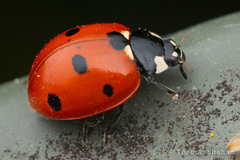
The animals people record most often in the United Kingdom include the Eastern Gray Squirrel, the Common Hedgehog, the Red Fox, the Mallard, the European Robin, the Common Wood-Pigeon, the Asian Lady Beetle and the Seven-spotted Lady Beetle. The most recorded plant is herb robert.
Most recorded here
The species with the most research-grade observations on iNaturalist, and how many each has. Most recorded doesn't mean native.
Birds
- Mallard Anas platyrhynchos46,660
- European Robin Erithacus rubecula44,552
- Common Wood-Pigeon Columba palumbus35,868
 Eurasian Blackbird Turdus merula32,295
- Mute Swan Cygnus olor29,962
 Grey Heron Ardea cinerea29,543
 Black-headed Gull Chroicocephalus ridibundus26,810
 Carrion Crow Corvus corone26,711
- Eurasian Magpie Pica pica26,302
 Eurasian Moorhen Gallinula chloropus25,512
Plants
- Herb Robert Geranium robertianum32,536
- Red campion Silene dioica30,784
- Great stinging nettle Urtica dioica29,281
 Lesser celandine Ficaria verna28,368
- Lawn daisy Bellis perennis25,437
- Common yarrow Achillea millefolium24,934
- Garlic mustard Alliaria petiolata23,701
 Ribwort plantain Plantago lanceolata23,689
- Hogweed Heracleum sphondylium23,660
 Cow Parsley Anthriscus sylvestris22,906
Mammals
- Eastern Gray Squirrel Sciurus carolinensis27,305
- Common Hedgehog Erinaceus europaeus16,621
- Red Fox Vulpes vulpes11,744
 European Rabbit Oryctolagus cuniculus11,628
- Western Roe Deer Capreolus capreolus9,912
- Grey Seal Halichoerus grypus5,683
- European Mole Talpa europaea4,524
 Brown Rat Rattus norvegicus4,400
 Reeves's Muntjac Muntiacus reevesi4,067
- Brown Hare Lepus europaeus4,043
Insects
 Asian Lady Beetle Harmonia axyridis59,862
 Seven-spotted Lady Beetle Coccinella septempunctata49,953
 Speckled Wood Pararge aegeria39,910
- Red Admiral Vanessa atalanta33,996
 European Peacock Butterfly Aglais io30,118
 Large Yellow Underwing Noctua pronuba28,961
- Western Honey Bee Apis mellifera26,409
- Meadow Brown Maniola jurtina25,548
- Gatekeeper Pyronia tithonus24,883
- European Comma Polygonia c-album22,522
Spiders and kin
- Cross Orbweaver Araneus diadematus23,364
- European Nursery Web spider Pisaura mirabilis11,895
- Noble False Widow Steatoda nobilis10,491
- Long-bodied Cellar Spider Pholcus phalangioides7,211
 Goldenrod Crab Spider Misumena vatia5,039
Amphibians
- European Common Frog Rana temporaria19,551
- European Toad Bufo bufo16,639
 Smooth Newt Lissotriton vulgaris5,184
Mollusks
- Garden Snail Cornu aspersum18,955
- Brown-lipped Snail Cepaea nemoralis12,399
- White-lipped Snail Cepaea hortensis6,673
 Atlantic Dogwhelk Nucella lapillus3,726
How a trip works
A trip has its own trail of lessons: meet six species, match them to new photos, then practice with four choices. Species you learn go into your Fieldbook, and starting a trip earns its Passport stamp. Your home place stays as it is.
Your first lesson starts right away, with real photos. Free, no sign-up.
Species lists and counts from research-grade observations on iNaturalist, as of November 2026. Free, with no ads, no account, and no purchases.
Photo credits
Eurasian Blackbird: (c) Luiz Lapa, CC BY; Grey Heron: (c) Frank Sengpiel, CC BY; Black-headed Gull: (c) Dmitry Dubikovskiy, CC BY-NC; Carrion Crow: (c) Eidiu, CC BY-NC; Eurasian Moorhen: (c) Erik Eckstein, CC BY-NC; Lesser celandine: (c) Bernard Picton, CC BY; Ribwort plantain: (c) Miroslav Marić, CC BY-NC; Cow Parsley: (c) Antti Henttonen, CC BY-NC; European Rabbit: (c) jitensha2021, CC BY-NC; Brown Rat: (c) Mark Philpott, CC BY-NC; Reeves's Muntjac: (c) instead, CC BY-NC; Asian Lady Beetle: (c) Paolo Mazzei, CC BY-NC; Seven-spotted Lady Beetle: (c) Thomas Shahan, CC BY-NC; Speckled Wood: (c) Avelino Vieira, CC BY-NC; European Peacock Butterfly: (c) S. Rae, CC BY; Large Yellow Underwing: (c) janet graham, CC BY; Goldenrod Crab Spider: (c) Robby Deans, CC BY-NC; Smooth Newt: (c) Vit Lukas, CC BY-NC; Atlantic Dogwhelk: (c) Leonid Rasran, CC BY-NC. Photos from iNaturalist, used under their Creative Commons licenses.