Learn the wildlife of any country
Learn the wildlife of Nepal
Asia
5,340 species have research-grade observations in Nepal on iNaturalist. KnowKi turns the most recorded into short lessons with real photos, so you can learn a country's wildlife from home.
Meet the mammals of Nepal →Your first lesson starts right away, with real photos. Free, no sign-up.
What animals live in Nepal?
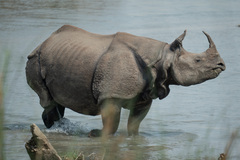


The animals people record most often in Nepal include the Rhesus Macaque, the Indian Rhinoceros, the Chital, the Red-vented Bulbul, the Black Kite, the House Crow, the Seven-spotted Lady Beetle and the Indian Tortoiseshell. The most recorded plant is cannabis.
Most recorded here
The species with the most research-grade observations on iNaturalist, and how many each has. Most recorded doesn't mean native.
Birds
- Red-vented Bulbul Pycnonotus cafer610
 Black Kite Milvus migrans589
- House Crow Corvus splendens486
- Oriental Magpie-Robin Copsychus saularis456
- Common Myna Acridotheres tristis420
- White-throated Kingfisher Halcyon smyrnensis418
 Large-billed Crow Corvus macrorhynchos415
 Grey Bushchat Saxicola ferreus371
- Indian Peafowl Pavo cristatus367
 Himalayan Griffon Gyps himalayensis367
Plants
- Cannabis Cannabis sativa358
- Tree Rhododendron Rhododendron arboreum246
 237
- Common lantana Lantana camara207
 Drumstick Primrose Primula denticulata199
- Lokta Daphne bholua159
- Castor bean Ricinus communis146
- Pink knotweed Persicaria capitata144
 Scaly rhododendron Rhododendron lepidotum142
- Bluemink Ageratum houstonianum129
Mammals
- Rhesus Macaque Macaca mulatta1,040
 Indian Rhinoceros Rhinoceros unicornis904
 Chital Axis axis583
 Nepal Sacred Langur Semnopithecus schistaceus396
- Wild Boar Sus scrofa167
- Indochinese Hog Deer Axis porcinus167
 Five-striped Palm Squirrel Funambulus pennantii166
- Himalayan Tahr Hemitragus jemlahicus163
 Asian Elephant Elephas maximus156
- Sambar Rusa unicolor155
Insects
 Seven-spotted Lady Beetle Coccinella septempunctata698
- Indian Tortoiseshell Aglais caschmirensis530
 Chocolate Pansy Junonia iphita308
- Peacock Pansy Junonia almana270
 Common Mormon Swallowtail Papilio polytes264
- Indian Red Admiral Vanessa indica236
- Asian Honey Bee Apis cerana218
 Plain Tiger Butterfly Danaus chrysippus209
 Scarlet Skimmer Crocothemis servilia192
 Russet Percher Neurothemis fulvia181
Spiders and kin
 Joro Spider Trichonephila clavata158
 Giant Golden Orbweaver Nephila pilipes96
- Garden cross spider Argiope pulchella79
Reptiles
- Mugger Crocodile Crocodylus palustris463
- Gharial Gavialis gangeticus410
 Indian Garden Lizard Calotes versicolor216
- Kashmir Rock Agama Laudakia tuberculata78
 Bengal Monitor Varanus bengalensis62
 Burmese Python Python bivittatus42
- Oriental Rat Snake Ptyas mucosa36
How a trip works
A trip has its own trail of lessons: meet six species, match them to new photos, then practice with four choices. Species you learn go into your Fieldbook, and starting a trip earns its Passport stamp. Your home place stays as it is.
Your first lesson starts right away, with real photos. Free, no sign-up.
Species lists and counts from research-grade observations on iNaturalist, as of November 2026. Free, with no ads, no account, and no purchases.
Photo credits
Black Kite: iNaturalist contributor, CC0; Large-billed Crow: (c) Joe Bourget, CC BY-NC; Grey Bushchat: (c) Pål A. Olsvik, CC BY; Himalayan Griffon: (c) Геннадий Дякин, CC BY-NC; Gentiana depressa: (c) rawdenh, CC BY-NC; Drumstick Primrose: (c) Suresh Ghimire, CC BY-NC; Scaly rhododendron: (c) Morten Ross, CC BY; Indian Rhinoceros: (c) nonext(공인인증서), CC BY-NC; Chital: (c) Gabi Rusu, CC BY-NC; Nepal Sacred Langur: (c) Wilbur Goh, CC BY-NC; Five-striped Palm Squirrel: (c) navas_kiliyanni, CC BY-NC; Asian Elephant: (c) Mousam Ray, CC BY-NC; Seven-spotted Lady Beetle: (c) Thomas Shahan, CC BY-NC; Chocolate Pansy: (c) Cheongweei Gan, CC BY-NC; Common Mormon Swallowtail: (c) Lizhiiguo, CC BY-NC; Plain Tiger Butterfly: (c) Pavel Vojtek, CC BY-NC; Scarlet Skimmer: (c) budak, CC BY-NC; Russet Percher: (c) Paul Dickson, CC BY-NC; Joro Spider: (c) Trey Wardlaw, CC BY-NC; Giant Golden Orbweaver: (c) budak, CC BY-NC; Indian Garden Lizard: (c) Devika M B, CC BY; Bengal Monitor: (c) Dr Caesar Sengupta, CC BY-NC; Burmese Python: (c) Wayne Fidler, CC BY-NC. Photos from iNaturalist, used under their Creative Commons licenses.