Learn the wildlife of national parks
Learn the wildlife of Nelson's Dockyard National Park
Antigua & Barbuda
555 species have research-grade observations inside Nelson's Dockyard National Park on iNaturalist. KnowKi turns the most recorded into short lessons with real photos, so you know what you're looking at before you go.
Meet the birds of Nelson's Dockyard National Park →Your first lesson starts right away, with real photos. Free, no sign-up.
What animals live in Nelson's Dockyard National Park?


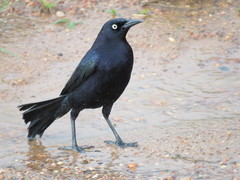

The animals people record most often in Nelson's Dockyard National Park include the Small Indian Mongoose, the Domestic Goat, the Domestic Cat, the Lesser Antillean Bullfinch, the Bananaquit, the Carib Grackle, the Cuban Brown Snail and the Lesser Antillean whistling frog. The most recorded plant is turk's cap cactus.
Most recorded here
The species with the most research-grade observations on iNaturalist, and how many each has. Most recorded doesn't mean native.
Birds
- Lesser Antillean Bullfinch Loxigilla noctis71
- Bananaquit Coereba flaveola58
 Carib Grackle Quiscalus lugubris45
- Zenaida Dove Zenaida aurita34
 Ruddy Turnstone Arenaria interpres29
- Antillean Crested Hummingbird Orthorhyncus cristatus22
 Gray Kingbird Tyrannus dominicensis22
 Brown Pelican Pelecanus occidentalis20
 Green-throated Carib Eulampis holosericeus18
- White-crowned Pigeon Patagioenas leucocephala14
Plants
 Turk's Cap Cactus Melocactus intortus70
 60
 Giant airplant Tillandsia utriculata29
 Coral Vine Antigonon leptopus27
 Giant milkweed Calotropis procera26
- Neem Azadirachta indica25
- Bellyache Bush Jatropha gossypiifolia19
 Manchineel Hippomane mancinella17
 Indian tulip tree Thespesia populnea17
 Aloe vera Aloe vera17
Mammals
 Small Indian Mongoose Urva auropunctata11
 Domestic Goat Capra hircus7
- Domestic Cat Felis catus6
- Domestic Sheep Ovis aries3
Insects
 Tetrio Sphinx Pseudosphinx tetrio31
- Spotted Oleander Moth Empyreuma pugione25
- Western Honey Bee Apis mellifera15
 Great Southern White Ascia monuste12
- St. Andrew's Cotton Stainer Dysdercus andreae8
 Great Pondhawk Erythemis vesiculosa7
 Band-winged Dragonlet Erythrodiplax umbrata6
- Australian Cockroach Validiblatta australasiae5
- Hieroglyphic Moth Diphthera festiva4
 Little Yellow Eurema lisa3
Spiders and kin
- Silver Garden Orbweaver Argiope argentata9
 Spinybacked Orbweaver Gasteracantha cancriformis2
- Gray Wall Jumping Spider Menemerus bivittatus2
- Red House Spider Nesticodes rufipes1
Reptiles
- Watts' Anole Anolis wattsii47
 Barbuda Bank tree anole Anolis leachii39
 Red-footed Tortoise Chelonoidis carbonarius6
 Tropical House Gecko Hemidactylus mabouia5
- Green Iguana Iguana iguana3
- Antigua Least Gecko Sphaerodactylus elegantulus1
- Northern Turniptail Gecko Thecadactylus rapicauda1
 Mourning Gecko Lepidodactylus lugubris1
Fish
 Blackbar Soldierfish Myripristis jacobus19
- Four-eyed Butterflyfish Chaetodon capistratus19
- Yellowtail Snapper Ocyurus chrysurus18
 Longspine Squirrelfish Holocentrus rufus18
 Schoolmaster Snapper Lutjanus apodus18
- French Grunt Haemulon flavolineatum16
- Atlantic Blue Tang Acanthurus coeruleus16
 Caribbean Bluehead Wrasse Thalassoma bifasciatum15
 Coney Cephalopholis fulva15
 Caribbean Ocean Surgeonfish Acanthurus tractus15
Mollusks
 Cuban Brown Snail Zachrysia provisoria111
 66
- West Indian Bulimulus Bulimulus guadalupensis27
- West Indian Fuzzy Chiton Acanthopleura granulata17
 Common West Indian Bubble Bulla occidentalis16
- West Indian Top Shell Cittarium pica14
 Yellow Prickly Cockle Dallocardia muricata12
- Queen Conch Aliger gigas10
 Tiger Lucine Codakia orbicularis8
 Beaded Periwinkle Cenchritis muricatus8
How a trip works
A trip has its own trail of lessons: meet six species, match them to new photos, then practice with four choices. Species you learn go into your Fieldbook, and starting a trip earns its Passport stamp. Your home place stays as it is.
Your first lesson starts right away, with real photos. Free, no sign-up.
Species lists and counts from research-grade observations on iNaturalist, as of November 2026. Parks outside the U.S. are from the World Database on Protected Areas (UNEP-WCMC and IUCN, Protected Planet). KnowKi is not affiliated with the National Park Service or any park's managers. Free, with no ads, no account, and no purchases.
Photo credits
Carib Grackle: (c) Nicolas Olejnik, CC BY; Ruddy Turnstone: (c) John Clough, CC BY-NC; Gray Kingbird: (c) JeffreyGammon, CC BY-NC; Brown Pelican: (c) BJ Stacey, CC BY-NC; Green-throated Carib: (c) Christoph Moning, CC BY; Turk's Cap Cactus: (c) Bronzit_poet, CC BY-NC; Pilosocereus curtisii: (c) Don Loarie, CC BY; Giant airplant: (c) dshell, CC BY-NC; Coral Vine: (c) portioid, CC BY; Giant milkweed: (c) Susan J. Hewitt, CC BY-NC; Manchineel: (c) Sebastián Lescano, CC BY-NC; Indian tulip tree: (c) Daniel Cahen, CC BY; Aloe vera: (c) Forest and Kim Starr, CC BY; Small Indian Mongoose: (c) Don Loarie, CC BY; Domestic Goat: (c) Jakob Fahr, CC BY-NC; Tetrio Sphinx: (c) Biodiversidad urbana zona metropolitana Hidalgo, CC BY-NC; Great Southern White: (c) juditga, CC BY-NC; Great Pondhawk: (c) Cameron Eckert, CC BY-NC; Band-winged Dragonlet: (c) Greg Lasley, CC BY-NC; Little Yellow: (c) Greg Lasley, CC BY-NC; Spinybacked Orbweaver: (c) kenbuchholz, CC BY-NC; Barbuda Bank tree anole: (c) Bird Explorers, CC BY-NC; Red-footed Tortoise: (c) Iván Lau, CC BY-NC; Tropical House Gecko: (c) David Torres, CC BY-NC; Mourning Gecko: (c) Felipe Barrera Ocampo, CC BY-NC; Blackbar Soldierfish: (c) terence zahner, CC BY-NC; Longspine Squirrelfish: (c) Nicolas Lagière, CC BY-NC; Schoolmaster Snapper: (c) Pauline Walsh Jacobson, CC BY; Caribbean Bluehead Wrasse: (c) Pauline Walsh Jacobson, CC BY; Coney: (c) Mélodie Caussat, CC BY-NC; Caribbean Ocean Surgeonfish: (c) Pauline Walsh Jacobson, CC BY; Cuban Brown Snail: (c) Isaac Lord, CC BY-NC; Dentellaria formosa: (c) John D Reynolds, CC BY-NC; Common West Indian Bubble: (c) Jeff Garner, CC BY-NC; Yellow Prickly Cockle: (c) Susan J. Hewitt, CC BY-NC; Tiger Lucine: (c) Cole Tiemann, CC BY-NC; Beaded Periwinkle: (c) Bob Peterson, CC BY. Photos from iNaturalist, used under their Creative Commons licenses.